


Market insights
Getting inside investors’ minds
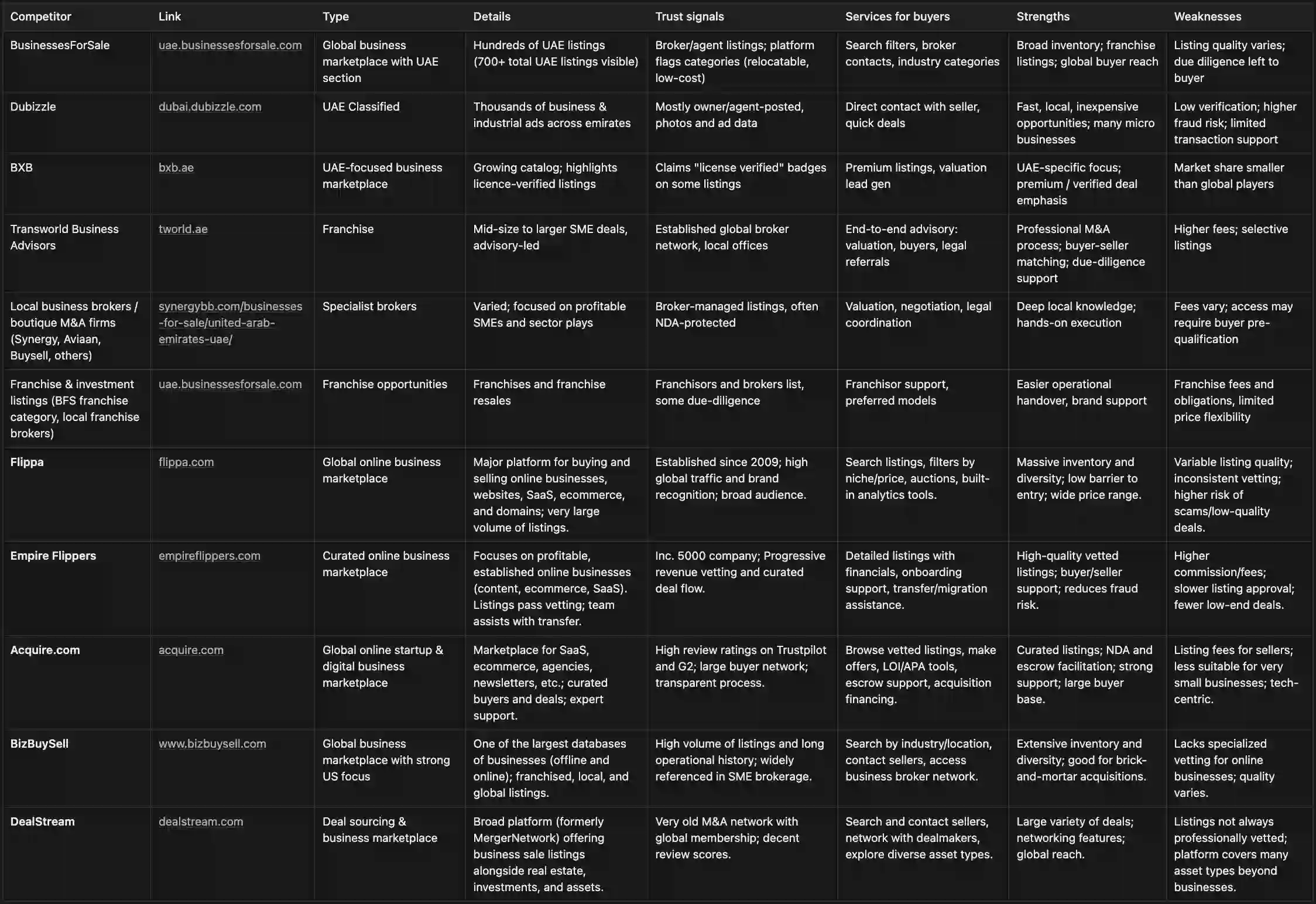
To ground our findings, I analyzed 14 competing platforms across the UAE and globally. The patterns were clear:
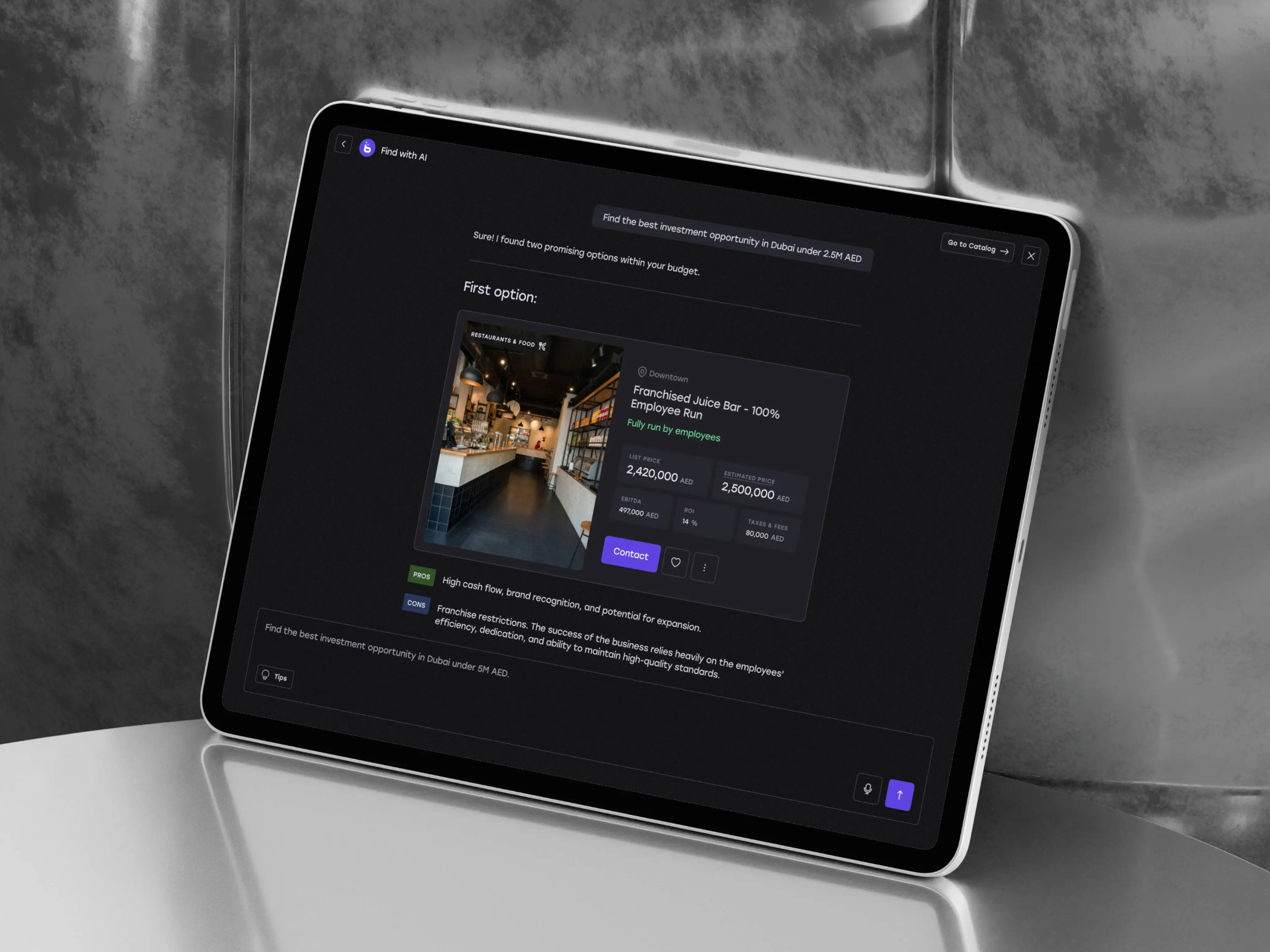
This opened the door for something bigger – a product that’s not just another listing site, but a true decision‑support system. One that blends verified data, clear comparisons, and transparent logic, helping investors think smarter, feel surer, and act faster.
Mapping
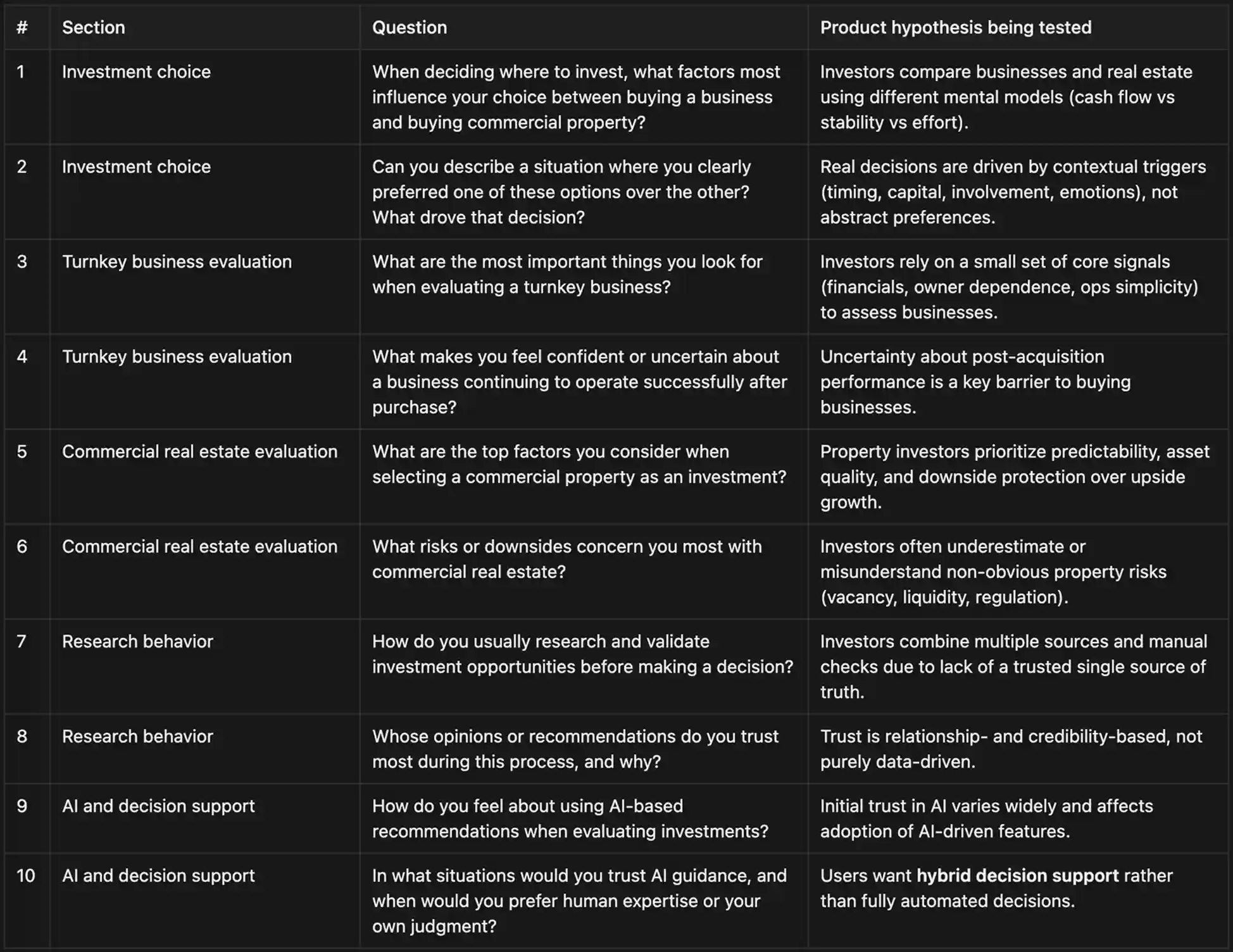
Turning insights into hypotheses
After mapping the competitive landscape, I distilled my findings into ten product hypotheses across five key themes, from how people choose investments to how much they trust AI recommendations. These became the starting point for validating assumptions with real users. To test them, I ran an online survey with 41 participants – investors at different stages of experience. 23 had prior investment backgrounds in real estate or turnkey businesses, while 18 were still exploring their first opportunities. Their responses revealed emerging patterns: how investors prioritize confidence over speed, what increases hesitation, and when uncertainty begins to creep in.
Interviewing
Listening to real investors
Numbers only show part of the story, so I followed up with 7 in‑depth interviews – 4 experienced investors and 3 new to the field. That’s where the real nuance surfaced. One investor admitted it’s tough “to compare a coffee shop with a warehouse – both can be profitable, but how do you know which fits you?” Another said, “I don’t need more listings, I need help figuring out which option won’t waste my time.”
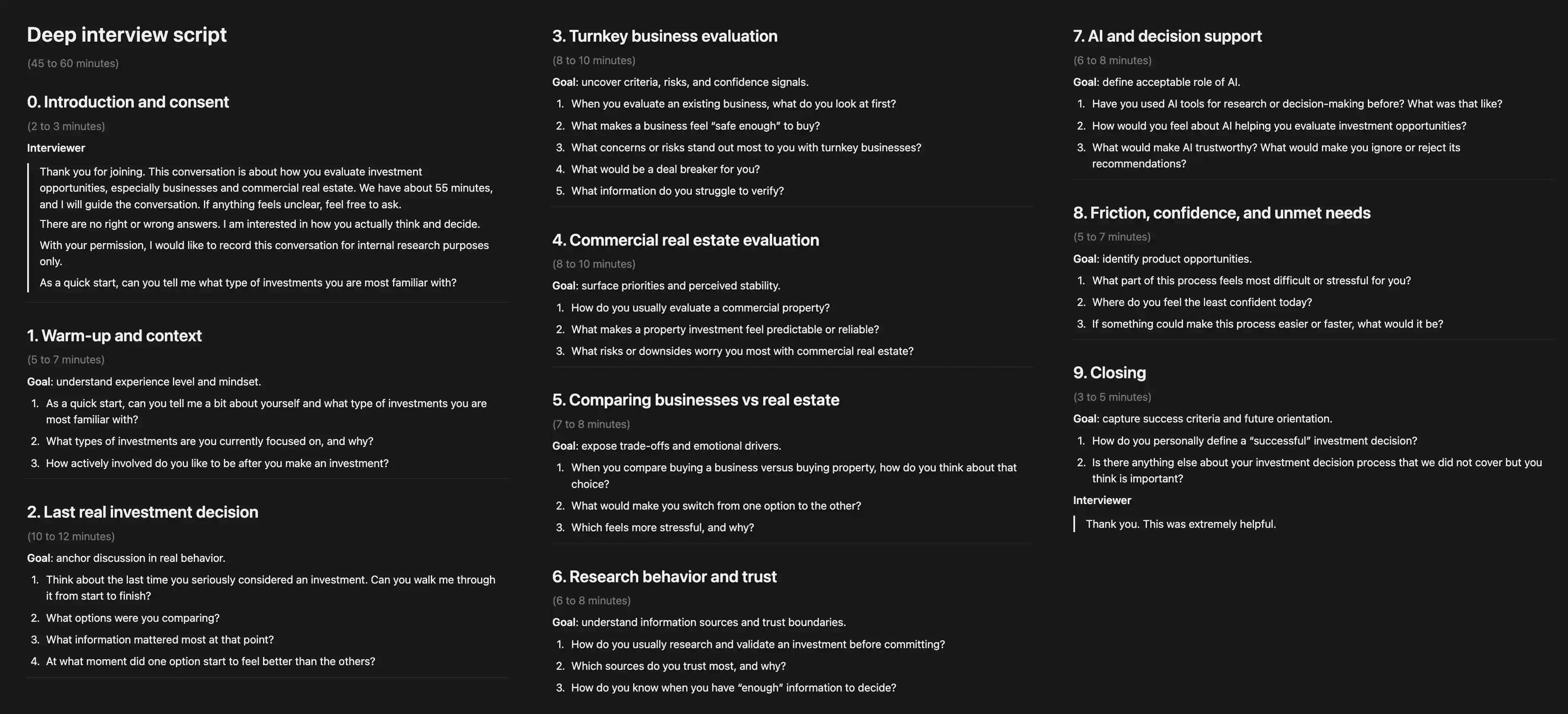
These conversations revealed what truly matters to investors: clarity, confidence, and context. People don’t want endless data; they want guidance that helps them decide quickly and feel sure about it.
Outcomes
From insights to JTBD outcomes
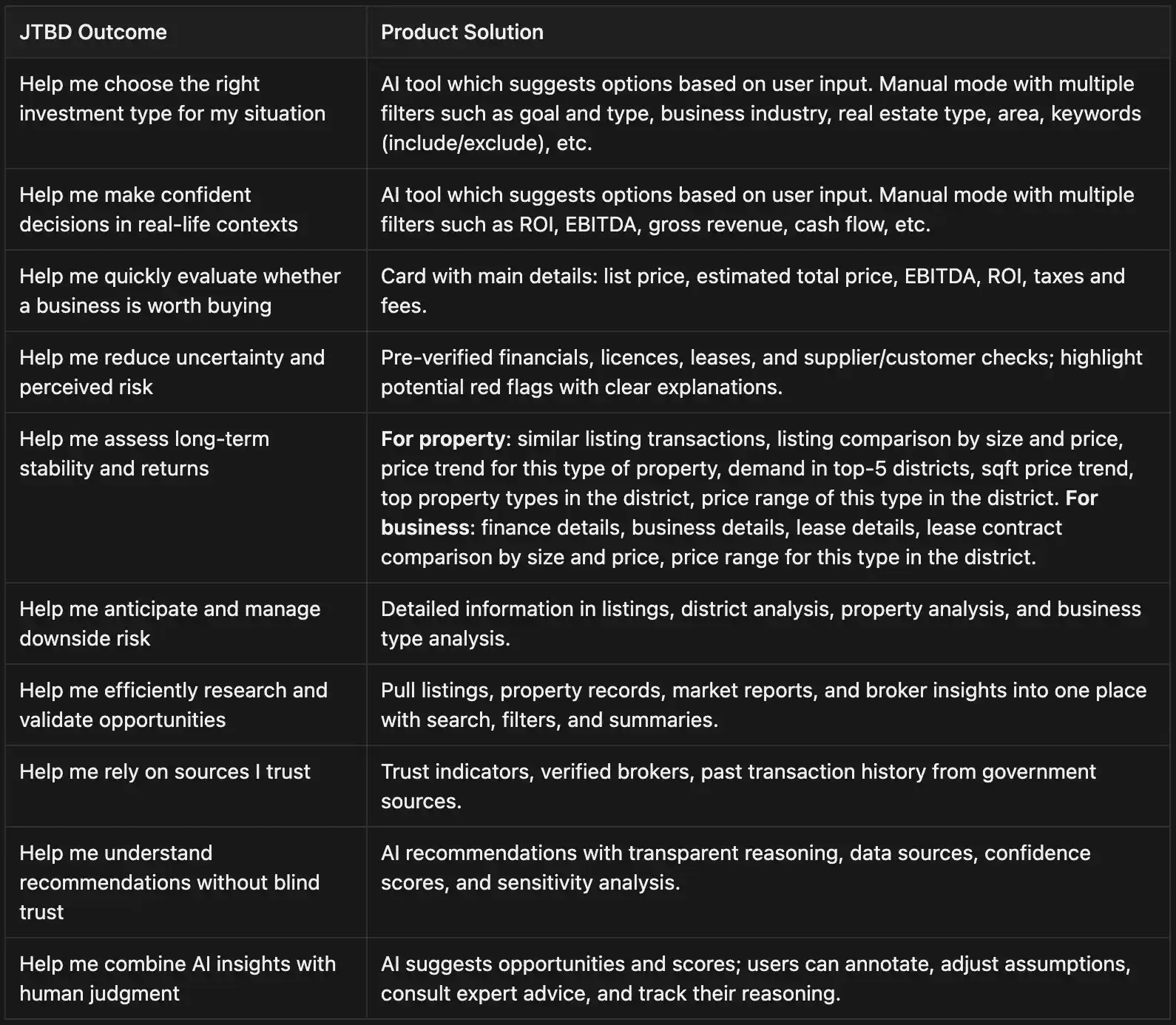
Each interview uncovered a practical need – a “job” investors were trying to get done. I defined and structured these into clear Jobs‑to‑Be‑Done, capturing goals like evaluating opportunities faster, reducing uncertainty, and choosing between options with confidence.
Define
Narrowing down what Really matters
Testing revealed that even small tweaks could make the investment experience feel simpler and more intuitive. We focused on refining the core interactions that drive quick, confident decisions:
I translated research findings into clear, structured tools:
1
Narrowing down what Really matters
2
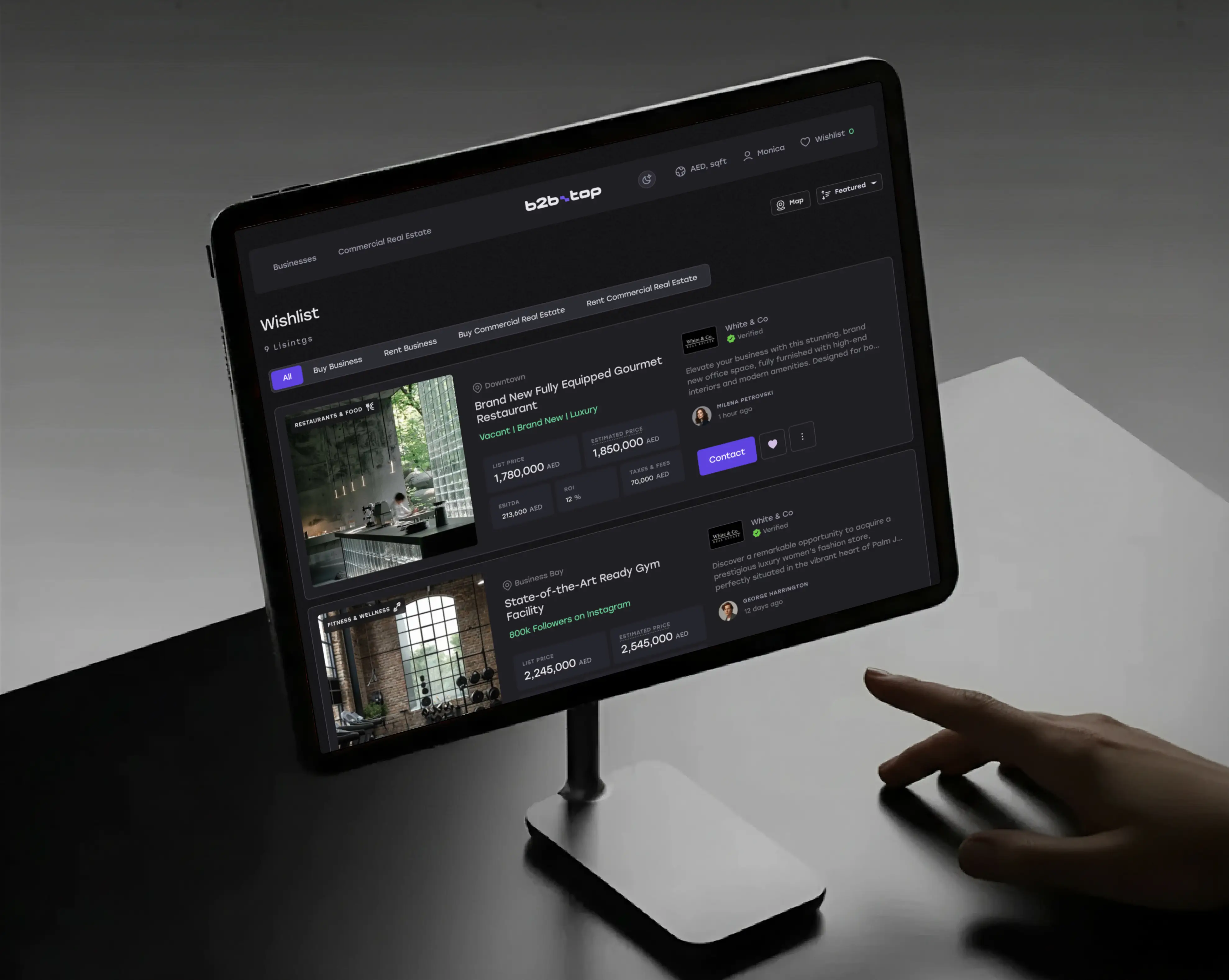
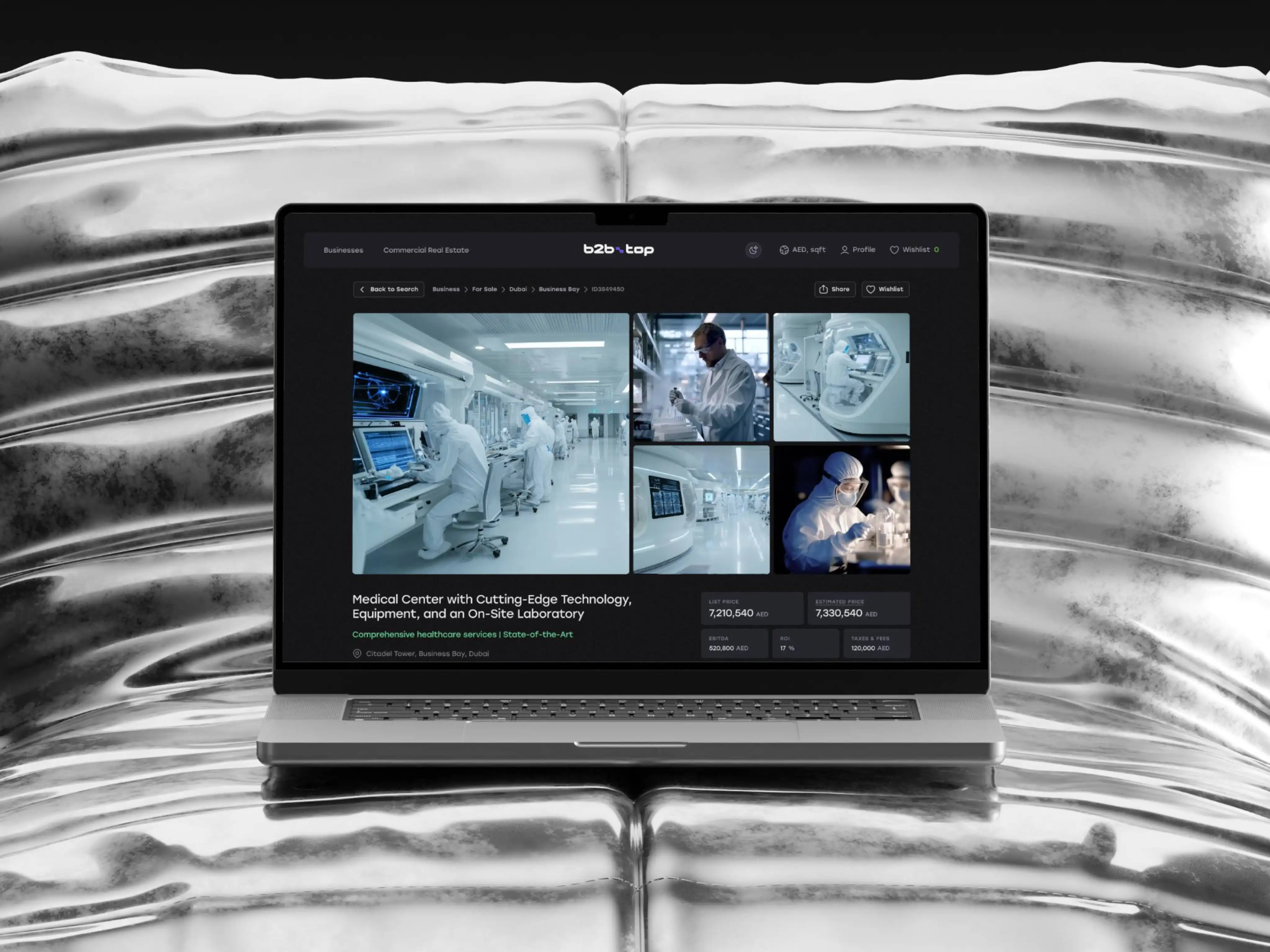
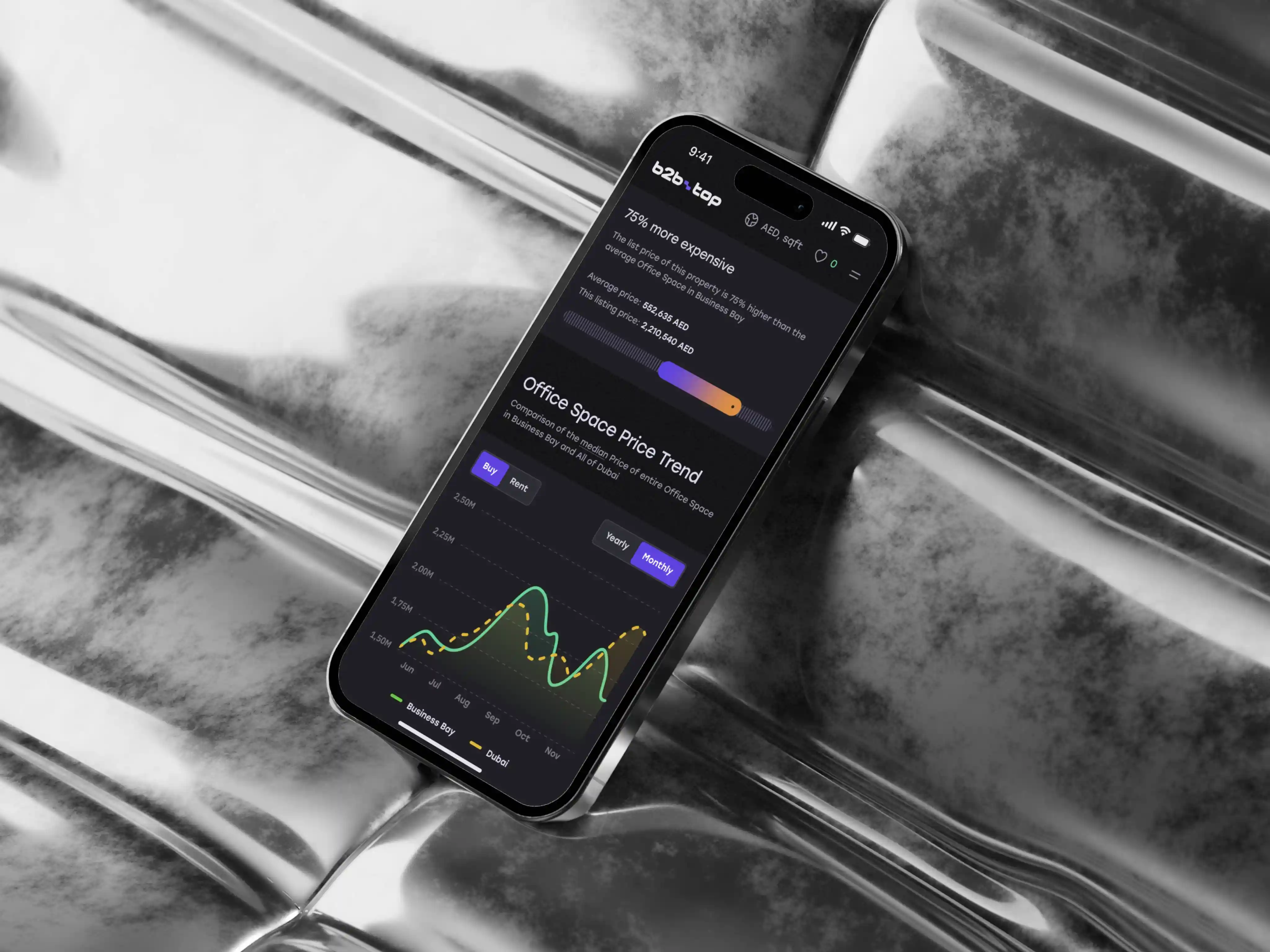
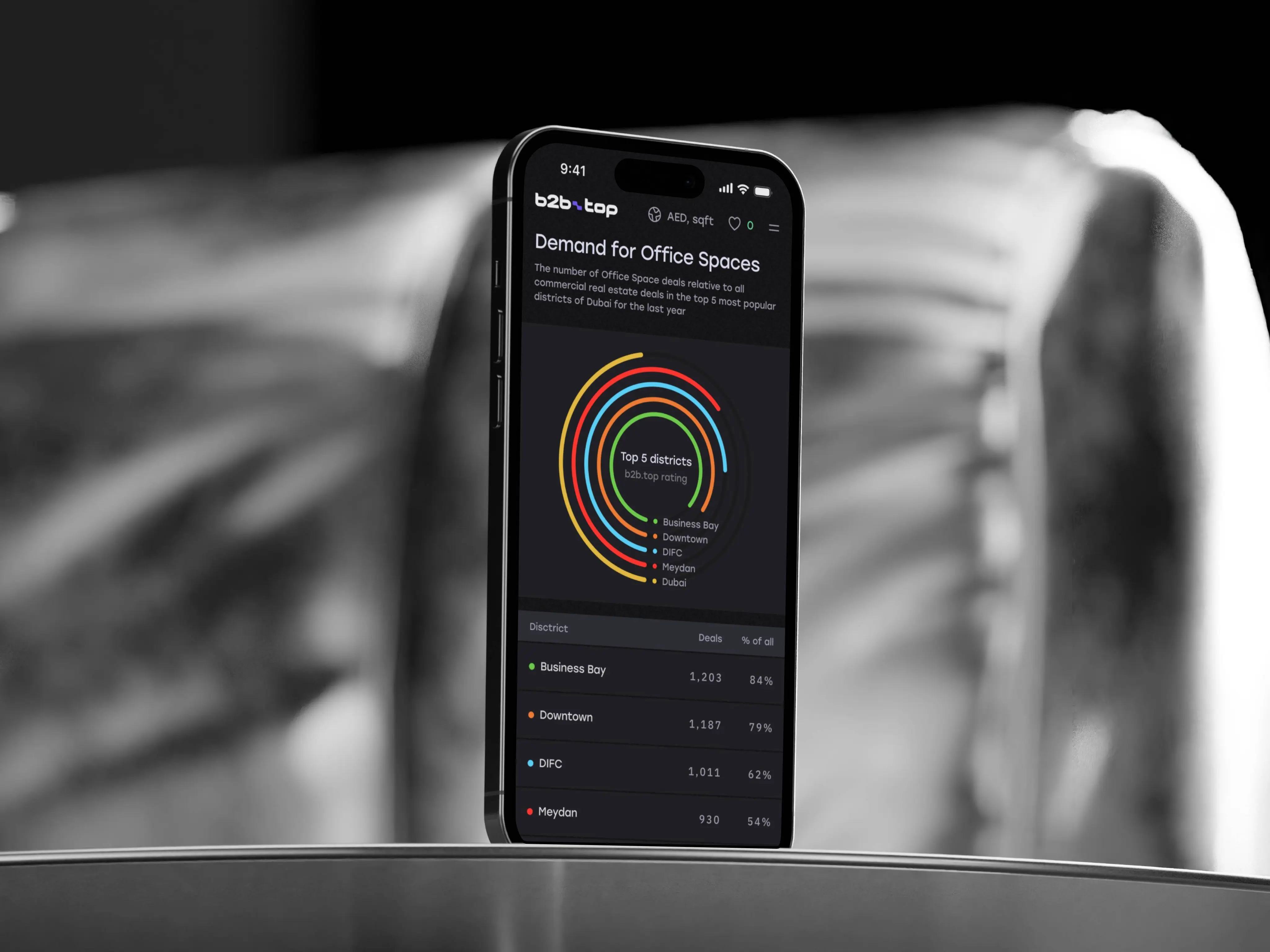
Listing cards: Improved visual hierarchy and introduced quick‑scan metrics so users can grasp key details in seconds
3
Pricing clarity: Merged price filters and added clear ROI context to help investors understand value without extra clicks
The best part
The game‑changing deck builder
Real estate agents move fast, often between calls, meetings, and client visits. I designed the deck builder to match that rhythm: a flexible, mobile‑friendly tool that helps agents create beautiful, data‑rich presentations in minutes instead of hours. It bridges the gap between research and client delivery, making professional, personal, and on‑the‑go collaboration effortless.
1
Control what clients see
Hide specific details like price, comparisons, or location maps to tailor each presentation to the client and context.
2
Merge multiple sources
Pull listings from favorites, agency stock, or entire client folders — plus view, filter, and sort everything directly inside the builder.
3
Edit on the fly
Adjust prices instantly if they’ve already negotiated with sellers, keeping presentations up to date.
4
Adapt to every screen and personalize the story
Create decks that look great on desktop or smartphone, choose between dark and light themes and add client names for a more engaging, one‑to‑one experience.
Key takeaways
What I learned
Building b2b.top reminded me that even the most data‑driven products are ultimately about trust and human confidence.
Findings from the project:
1
Diving deep into investor behavior taught me that small moments, such as a clear metric, a simpler filter, or a transparent explanation, can turn hesitation into action.
2
From guiding AI logic to designing intuitive tools like the deck builder and agent dashboard, I learned how powerful it can be when business goals and user empathy align in design.
3
This project reinforced one core belief: good design in fintech is not about adding more data; it is about helping people feel confident in their decisions.